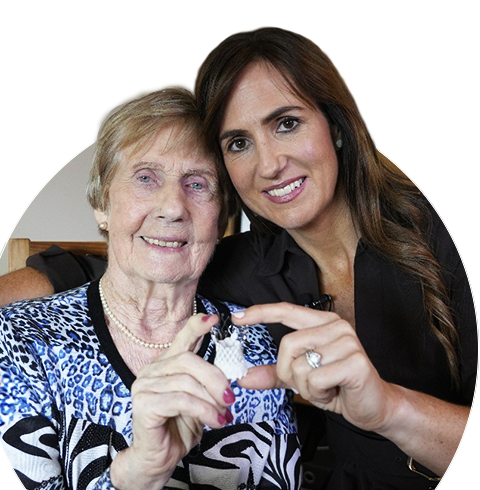
Severe aortic stenosis will not improve on its own. If left untreated, once severe symptoms develop, the average patient survival rate at two years is just 50%.4 Medtronic TAVR is helping women beat the odds.1
Severe aortic stenosis, also known as heart valve failure, is a progressive condition that prevents your aortic valve from opening and closing properly. The only effective treatments for severe aortic stenosis are valve replacement procedures.5
Symptoms can include shortness of breath, chest tightness, dizziness, feeling faint, or fatigue.5 Because these can also be mistaken for normal aging, it’s important to talk to your doctor.
From diagnosis to recovery, hear from Darian, a patient who regained a sense of independence after her TAVR procedure.
In a first-of-its-kind study of patients with small heart valves — nearly all of them women — the Medtronic Evolut™ TAVR valve delivered excellent valve performance§ compared to the Edwards SAPIEN™* TAVR valve, with equal safety results at two years.
 4X
4X
 10X
10X
TAVR may be a good option for you if you are having symptoms and if tests performed by your heart team show that it may be helpful. TAVR may also be an option for you if you are at risk for open-heart surgery. Find out.
TAVR is less invasive than open-heart surgery, also known as surgical aortic valve replacement (SAVR), and after pre-op, the procedure typically takes less than one hour. Your heart team will determine if you should have a mild sedative or general anesthesia.
After the procedure, most patients spend a few hours in the intensive care unit before transferring to a patient room. Typically, patients begin walking the same day as their Medtronic TAVR procedure and are discharged within a day or two.
TAVR is less invasive than open-heart surgery (SAVR). Patients experience shorter hospital stays and have a faster return to normal activities with TAVR.6
If you have more questions, click here.

† Medtronic TAVR is indicated to treat patients who have been diagnosed with symptomatic severe aortic stenosis.
‡ Based on the 2-year follow-up results from the SMART clinical trial, which demonstrated differences in valve performance‡ for Evolut compared with SAPIEN* and no differences in safety outcomes. SMART primarily enrolled patients with small annuli, the majority of whom were women.¹ Additional clinical trials evaluating women across a range of annulus sizes have shown lower mortality at 1 year for women treated with TAVR compared with surgical valve replacement,² with comparable mortality through 5 years in a separate study.³
§ Valve performance is as defined as freedom from bioprosthetic valve dysfunction (BVD) through 24 months. BVD is defined as a composite including any of the following: hemodynamic structural valve dysfunction (mean gradient ≥ 20 mmHg), non-structural valve dysfunction (severe prothesis-patient mismatch or ≥ moderate aortic regurgitation), clinical thrombosis, endocarditis, and aortic valve reintervention.
◊ Better blood flow, or "near-normal transvalvular flow," means that your new heart is operating well and the gradient across your valve is < 20 mmHg.